Nothing beats the sound of a ribeye steak hitting a screaming-hot pan. The sizzle, the smell of browning beef, the crust forming in seconds — that is steakhouse cooking, and you can do it in your own kitchen with one pan, a little butter, and about fifteen minutes. A ribeye is the most forgiving steak to cook at home because its marbling keeps it juicy even if your timing is slightly off, and a good sear turns that fat into flavor you cannot get any other way.
This guide walks you through the whole process, from picking the right steak at the store to resting it properly before the first cut. No special equipment is needed. A heavy skillet, a meat thermometer, and a timer will get you a steak with a deep brown crust, a pink and tender center, and juices that stay in the meat where they belong.
Why This Recipe Works
A great steak is built on three things: a dry surface, high heat, and rest. Moisture on the surface of the meat turns to steam in the pan, and steam cannot brown. Patting the steak dry and salting it ahead of time gives you a dry surface that sears instead of steaming. High heat drives the Maillard reaction, the chemical process that creates the brown crust and hundreds of savory flavor compounds. Resting after cooking lets the juices redistribute, so they stay in the steak instead of running out onto the cutting board.
The ribeye helps you at every step. Its fat cap and internal marbling baste the meat from the inside as it cooks, so the steak stays juicy even at medium. A thick cut, at least one and a quarter inches, gives you a wider margin between a perfect medium-rare and an overcooked center. Thin steaks go from rare to well done in seconds. Thick steaks give you time.
Ingredients
- 2 ribeye steaks, 1 1/4 to 1 1/2 inches thick, about 12 ounces each
- 1 1/2 teaspoons kosher salt
- 1 teaspoon black pepper, coarsely ground
- 1 tablespoon vegetable oil or other high smoke point oil
- 2 tablespoons unsalted butter
- 3 cloves garlic, lightly crushed
- 2 sprigs fresh thyme or rosemary
- Flaky sea salt, for finishing
Equipment You Will Need
- A heavy cast iron or stainless steel skillet, 12 inches
- An instant-read meat thermometer
- Tongs
- A wire rack set over a sheet pan, for resting
Step-by-Step Instructions
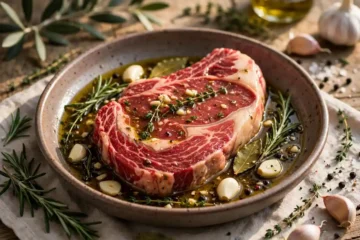
- Season early. At least 40 minutes before cooking, and up to 24 hours ahead, pat the steaks dry with paper towels and season all over with the kosher salt. If you have time, leave them uncovered on a rack in the refrigerator overnight. The salt draws out moisture, dissolves in it, and is pulled back into the meat, seasoning it deeply and drying the surface.
- Bring to room temperature. Set the steaks on the counter 30 to 45 minutes before cooking. A cold steak cooks unevenly, with a gray band around the edges and a cold center. A steak that starts near room temperature cooks evenly from edge to edge.
- Heat the pan. Put the skillet over high heat for 3 to 4 minutes until it is very hot. Add the oil and swirl to coat. The oil should shimmer and just begin to smoke. If it is not hot enough, the steak will steam instead of searing.
- Sear the first side. Lay the steaks in the pan away from you so the oil does not splash toward you. Do not move them. Let them sear undisturbed for 3 to 4 minutes until a deep brown crust forms. Pressing the steak down does not help and squeezes out juice, so leave it alone.
- Flip once. Turn the steaks with tongs. The first side should be a rich mahogany brown. Sear the second side for 3 to 4 minutes. For a one and a half inch steak this gives you a medium-rare center, around 130 degrees Fahrenheit.
- Baste with butter. Reduce the heat to medium, add the butter, garlic, and thyme to the pan, and tilt the pan so the melted butter pools on one side. Spoon the foaming butter over the steaks for 30 to 60 seconds. This adds flavor and helps the crust stay glossy.
- Check the temperature. Insert an instant-read thermometer into the thickest part of the steak, away from the bone and fat. Pull the steak at 125 degrees for rare, 130 degrees for medium-rare, 135 degrees for medium, and 145 degrees for medium-well. The temperature will rise 3 to 5 degrees while the steak rests.
- Rest the steak. Move the steaks to a wire rack and rest for 5 to 10 minutes. Do not cut into the steak early. Resting lets the muscle fibers relax and the juices settle back into the meat.
- Slice and serve. Slice against the grain into strips about half an inch thick, or serve whole. Sprinkle with flaky sea salt and spoon any pan juices over the top.
Tips for the Perfect Sear
- Dry is everything. Pat the steak dry right before it goes into the pan, even if you salted it hours ago. A dry surface browns. A wet surface steams.
- Do not crowd the pan. Two steaks in a 12 inch skillet is the limit. Crowding drops the pan temperature and the steaks steam instead of searing.
- Use a thermometer, not the clock. Stoves, pans, and steak thickness all vary. The thermometer is the only reliable way to hit your target doneness.
- Let the pan recover. If you cook steaks in batches, let the pan get screaming hot again between batches.
Variations
- Reverse sear. For steaks thicker than 1 1/2 inches, bake at 250 degrees Fahrenheit on a rack until the internal temperature reaches 120 degrees, then sear in a hot pan for 60 to 90 seconds per side. The result is an edge-to-edge pink center with almost no gray band.
- Garlic herb butter finish. Mix softened butter with minced garlic, chopped parsley, and lemon zest, and place a slice on the hot steak as it rests.
- Blue cheese topping. Crumble blue cheese over the steak during the last minute of resting for a tangy, steakhouse-style finish.
- Pan sauce. After removing the steaks, deglaze the pan with a splash of beef broth or red wine, scrape up the browned bits, and reduce for 2 minutes for a quick sauce.
Serving Suggestions
A ribeye deserves classic steakhouse sides. Garlic mashed potatoes, a loaded baked potato, creamed spinach, roasted asparagus, or a crisp wedge salad all work beautifully. For a lighter plate, serve the steak sliced over a big salad with blue cheese and balsamic. A glass of red wine, a baked potato with sour cream, and a green vegetable turn a weeknight steak into a full steakhouse dinner at home.
Storage and Reheating
Store leftover steak in an airtight container in the refrigerator for up to 3 days. To reheat without drying it out, warm it gently in a 250 degree Fahrenheit oven until it reaches 110 degrees internally, then sear it quickly in a hot buttered pan for 30 seconds per side. Leftover steak is also excellent sliced cold over salads or tucked into sandwiches with horseradish sauce.
Frequently Asked Questions
How long should I cook a ribeye steak?
For a 1 1/4 to 1 1/2 inch ribeye in a hot skillet, plan on 3 to 4 minutes per side for medium-rare, plus a minute of butter basting. Always confirm with a thermometer, since stoves and steak thickness vary.
Should I salt my steak before cooking?
Yes, and the timing matters. Salt at least 40 minutes before cooking, or right before it goes in the pan. Salting 5 to 10 minutes before cooking is the worst timing, because the salt draws moisture to the surface and the surface is still wet when it hits the pan.
What temperature is medium-rare for ribeye?
Medium-rare is 130 to 135 degrees Fahrenheit at the center. Pull the steak from the heat at 130 degrees, because the temperature rises 3 to 5 degrees as it rests.
Do I need a cast iron skillet?
A cast iron skillet is ideal because it holds heat well, but a heavy stainless steel skillet works too. Avoid thin nonstick pans, which cannot get hot enough for a proper sear and can be damaged by high heat.
Why is my steak gray instead of brown?
A gray steak usually means the pan was not hot enough or the surface of the meat was wet. Dry the steak well, heat the pan until the oil shimmers, and do not move the steak while it sears.
How long should steak rest before cutting?
Rest a ribeye for 5 to 10 minutes, about half as long as it cooked. Cutting too soon lets the juices run out onto the board instead of staying in the meat.
Once you cook a ribeye this way, the steakhouse stops feeling like a special occasion destination and starts feeling like something you can make any night of the week. A good steak, a hot pan, and a few minutes of patience are all it takes.

0 Comments